Travel Morocco
Travel Morocco: Where Ancient Medinas Meet Atlantic Waves and Saharan Dreams Collide
Morocco sits at the crossroads of continents like a jewel box left open, spilling its treasures across North Africa’s shoulder. Picture this: you’re sipping mint tea on a rooftop terrace in Marrakech while the muezzin’s call to prayer mingles with the distant clatter of donkey carts navigating thousand-year-old alleyways. Below, the souks pulse with life—leather tanners working their craft as their grandfathers did, spice merchants weighing out saffron worth more than gold, and yes, that persistent rug seller who somehow knows you’re American before you’ve even opened your mouth.
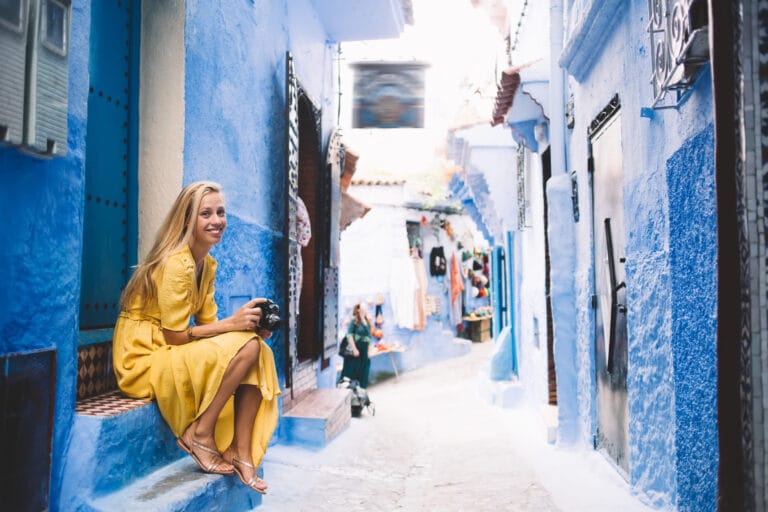
I’ve wandered through Morocco enough times to know that this country defies every expectation you bring to it. It’s simultaneously exactly what you imagine—those Instagram-worthy blue walls of Chefchaouen, the endless dunes of Erg Chebbi—and nothing like what you expect at all.
The Morocco Nobody Tells You About
Let me share something that took me three trips to figure out: Morocco isn’t one country, it’s at least five different worlds stitched together by history and highways. The Morocco of Casablanca’s business suits and beachfront cafés bears almost no resemblance to the Morocco of Berber villages clinging to Atlas Mountain slopes. And neither prepares you for the Morocco of Essaouira, where Atlantic winds carry the scent of grilled sardines and Gnawa musicians play until dawn.
Most travelers make the mistake of trying to “do” Morocco in ten days, racing from imperial city to imperial city like they’re collecting stamps. But Morocco reveals itself slowly, like peeling back layers of an onion—each one making your eyes water a little more, each one adding complexity to the flavor.
Navigating the Imperial Cities Without Losing Your Mind (Or Your Dirham)
Fez el-Bali remains the world’s largest car-free urban area, and trust me, after your fifth wrong turn in its 9,400 alleyways, you’ll understand why even Google Maps throws up its digital hands in defeat. The medina here isn’t just old; it’s medieval in the most literal sense. Donkeys still deliver Coca-Cola to shops that have been selling brass lamps since before Columbus set sail.
But here’s what the guidebooks won’t tell you: hire a guide for your first day in Fez, then fire them and get lost on purpose the second day. The magic happens when you stumble into a neighborhood hammam where no tourist has ventured, or when you find yourself invited for tea by a carpet seller who’s given up on making a sale and just wants to practice his English.
Marrakech, on the other hand, has become something of a theme park version of itself. The Jemaa el-Fnaa square transforms each evening into what I can only describe as a medieval circus on steroids—snake charmers, storytellers, henna artists, and enough fresh orange juice vendors to drown a small army. It’s overwhelming, it’s touristy, and it’s absolutely essential. Just don’t eat at the food stalls unless you have a stomach forged in the fires of street food hell. I learned that lesson the hard way, spending two days in my riad bathroom contemplating the life choices that led me to trust sheep’s head soup from stall number 47.
The Atlas Mountains: Where Time Forgot to Move Forward
Venture into the High Atlas, and Morocco transforms yet again. Here, in villages like Imlil or Aroumd, Berber culture remains largely untouched by the Arabic influence that dominates the cities. The landscape looks like someone took the American Southwest, added snow-capped peaks, and populated it with people who’ve been living the same way for centuries.
I once spent a week trekking from village to village with a Berber guide named Hassan who spoke five languages but couldn’t read in any of them. He navigated by memory and instinct, leading us through valleys where the only sounds were wind and water. In these mountains, hospitality isn’t just a cultural nicety—it’s a survival mechanism that’s been honed over generations. You’ll be invited into homes where the entire family sleeps in one room, yet they’ll give you their best blankets and cook meals that would shame a five-star restaurant.
The thing about trekking in the Atlas is that it strips away every Western comfort you’ve grown accustomed to. No hot showers, no WiFi, no escape from the reality of how most of the world actually lives. It’s humbling in a way that no amount of poverty tourism in city slums can replicate.
Coastal Morocco: Atlantic Dreams and Mediterranean Schemes
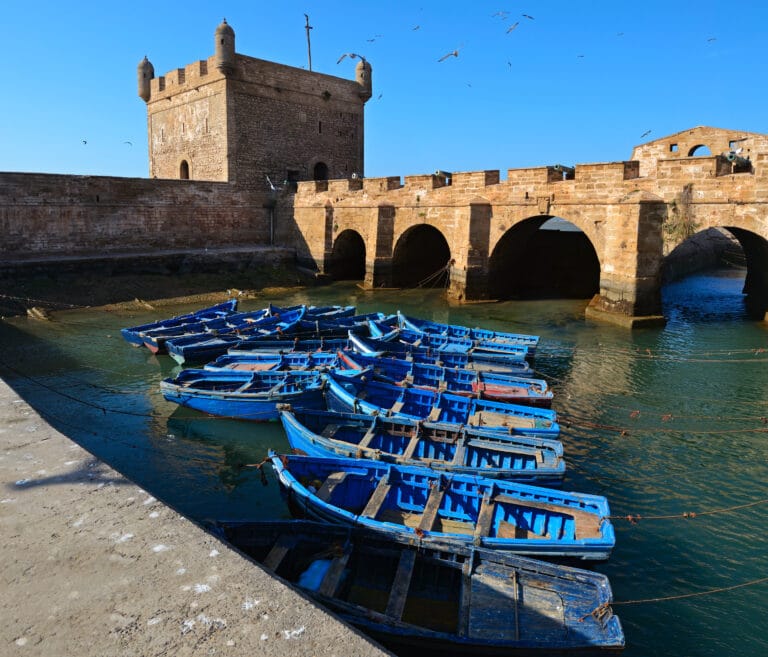
Essaouira might be the most perfectly imperfect town on Earth. The Portuguese built it, the French refined it, and the hippies discovered it in the 1960s. Jimi Hendrix may or may not have written “Castles Made of Sand” here (locals insist he did, historians disagree), but the town certainly feels like it could inspire poetry.
The wind here is relentless. It’s the kind of wind that turns beach umbrellas into weapons and makes every conversation a shouting match. But that same wind brings world-class windsurfing and kitesurfing, plus it keeps the temperature bearable when Marrakech is melting in August heat.
What I love about Essaouira is its refusal to take itself too seriously. The medina is small enough to navigate without a map, the hustlers are almost apologetically mild compared to their Marrakech cousins, and the seafood is so fresh it was probably swimming while you were ordering it.
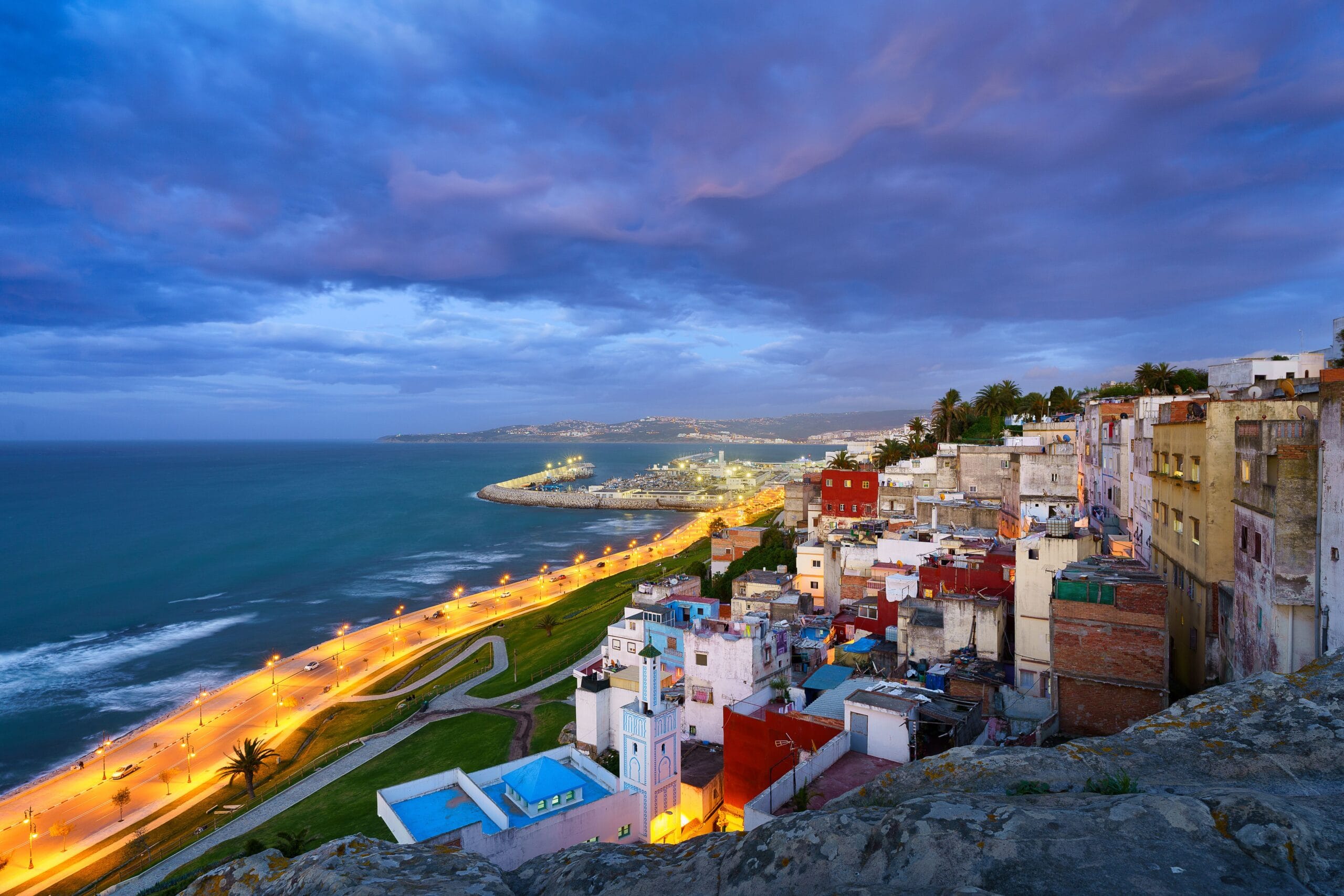
Further north, Tangier has shed its reputation as a den of spies and expatriate writers (mostly). The city that once hosted everyone from William S. Burroughs to Paul Bowles has cleaned up its act, though you can still feel echoes of its international intrigue past in the Petit Socco cafés where old men play cards and speak in whispers.
The Sahara: More Than Just a Desert
Every Morocco itinerary includes a camel trek into the Sahara, usually from Merzouga to spend a night in a Berber camp. Let me be brutally honest: this is both the most touristy thing you’ll do in Morocco and somehow still magical enough to justify every dirham.
The camps range from basic (squat toilets and tagines cooked over open fires) to luxury (actual beds, solar-powered electricity, and somehow, inexplicably, WiFi). I’ve done both, and while the luxury camps are more comfortable, there’s something to be said for the authentic discomfort of sand in every crevice and a sky so full of stars it looks fake.
But the real Sahara experience happens away from the tourist camps. Wake up before dawn and climb the nearest dune alone. Watch the sun paint the sand in shades of gold and amber that no camera can capture. Listen to the silence—real silence, the kind that makes your ears ring because they’re so unused to the absence of noise.
The Food: Beyond Tagines and Couscous
Moroccan cuisine suffers from its own success. Every restaurant catering to tourists serves the same five dishes: tagine with preserved lemons, couscous on Fridays, pastilla if you’re lucky, and mint tea sweet enough to dissolve your teeth. It’s all delicious, but it’s like going to Italy and only eating spaghetti Bolognese.
The real Moroccan food happens in homes and street stalls. It’s the bissara (fava bean soup) ladled into bowls at 6 AM for workers heading to construction sites. It’s the sfenj (Moroccan donuts) fried fresh and dusted with sugar. It’s the mechanical-separated meat sandwiches from carts that would make a health inspector faint but taste like heaven at 2 AM after a night in the medina.
I’ve eaten sheep brain (creamy, mild, not worth the cultural capital you think you’re earning), camel meat (tough, gamey, basically beef’s angry cousin), and sea urchins fresh from the Atlantic (briny, complex, absolutely worth the effort). But my favorite meal in Morocco remains the simplest: khobz (bread) fresh from a communal oven, olive oil from someone’s cousin’s farm, and tomatoes that actually taste like tomatoes.
The Art of Negotiation (Or: How to Not Get Completely Fleeced)
Shopping in Morocco is a full-contact sport. The souk merchants are professionals; you’re an amateur. Accept this reality and you’ll have more fun. The opening price for anything—rugs, lamps, leather goods, your own kidneys if you’re not careful—is usually at least triple what they’ll actually accept.
But here’s the secret: it’s not really about the money. It’s about the dance. A good negotiation involves tea, conversation about your family, complaints about the weather/government/tourists these days, and at least three dramatic walk-aways. If you’re not spending at least 30 minutes buying a $20 scarf, you’re doing it wrong.
I once spent three hours negotiating for a rug in Fez. By the end, I knew the seller’s entire family history, his opinions on American foreign policy, and his mother’s recipe for harira soup. Did I overpay? Probably. Did I get a handmade rug and a story worth more than the extra $50 I definitely paid? Absolutely.
The Challenges Nobody Mentions
Morocco will test you. The constant hassle in tourist areas wears you down. The twentieth time someone follows you through the medina insisting they’re “not a guide, just practicing English,” you’ll want to scream. The assumption that every Western woman is sexually available gets old fast. The poverty is real and in your face in ways that make you question your right to be there as a tourist at all.
Transportation is an adventure in faith. Grand taxis (shared long-distance taxis) operate on the principle that a car designed for five can definitely hold seven if everyone gets friendly. CTM buses are reliable but book up fast. Trains work well between major cities but don’t go everywhere. And driving yourself? Possible, but Moroccan traffic operates on a system of rules that seem to change based on planetary alignment and the driver’s mood.
Then there’s the infamous “Moroccan timing.” If someone says five minutes, think twenty. If they say tomorrow, think maybe next week. This isn’t laziness or disrespect—it’s a fundamentally different relationship with time that prioritizes relationships over punctuality.
When to Go (And When to Run Away)
August in Morocco is what I imagine hell is like, if hell had better food. The heat in Marrakech and Fez becomes a living thing that stalks you through the streets. Meanwhile, the coast is packed with Moroccan families on holiday, and the mountains are actually pleasant if you can get there.
Ramadan presents unique challenges. Many restaurants close during the day, the medinas empty out in the afternoon, and the energy shifts completely. But breaking fast with a Moroccan family during Ramadan? That’s an experience that redefines hospitality.
Spring (March to May) and fall (September to November) remain the sweet spots. The weather is perfect, the crowds manageable, and the light has that quality that makes every photographer weep with joy.
The Morocco That Stays With You
After a dozen trips to Morocco, what stays with me isn’t the big moments—the sunrise over the Sahara, the chaos of the medinas, the grandeur of the kasbahs. It’s the small things. The way men hold hands as they walk, a gesture of friendship that would be misread in the West. The sound of the athan echoing off mountain valleys. The taste of water from a communal cup at a rural souk, shared with strangers who become temporary friends.
Morocco changes you, if you let it. It forces you to confront your assumptions about Islam, about Africa, about what you actually need versus what you think you need. It’s a country that operates on multiple levels simultaneously—modern and ancient, Arab and Berber, African and Mediterranean, frustrating and magical.
You’ll leave Morocco exhausted, probably a bit sick from something you ate, definitely poorer than when you arrived, and already planning your return trip. Because Morocco isn’t a destination you check off a list. It’s a place that gets under your skin like desert sand and refuses to leave.
Just don’t trust the sheep’s head soup. Trust me on that one.
World’s Most Authoritative Sources:
Bowles, Paul. The Sheltering Sky. New York: New Directions, 1949.
Burke, Edmund III. The Ethnographic State: France and the Invention of Moroccan Islam. Berkeley: University of California Press, 2014.
Geertz, Clifford. Islam Observed: Religious Development in Morocco and Indonesia. Chicago: University of Chicago Press, 1968.
Miller, Susan Gilson. A History of Modern Morocco. Cambridge: Cambridge University Press, 2013.
Pennell, C.R. Morocco Since 1830: A History. New York: New York University Press, 2000.